Quality Assured, Industry-Proven, and Ready for You
Our products meet international quality standards with rigorous testing and certification processes.
Continuous innovation drives our product development, ensuring cutting-edge chemical solutions.
Our skilled professionals provide technical expertise and personalized support for every client.
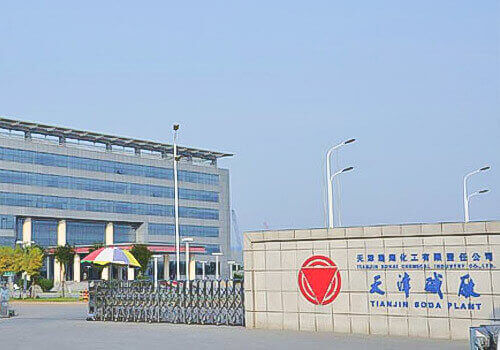
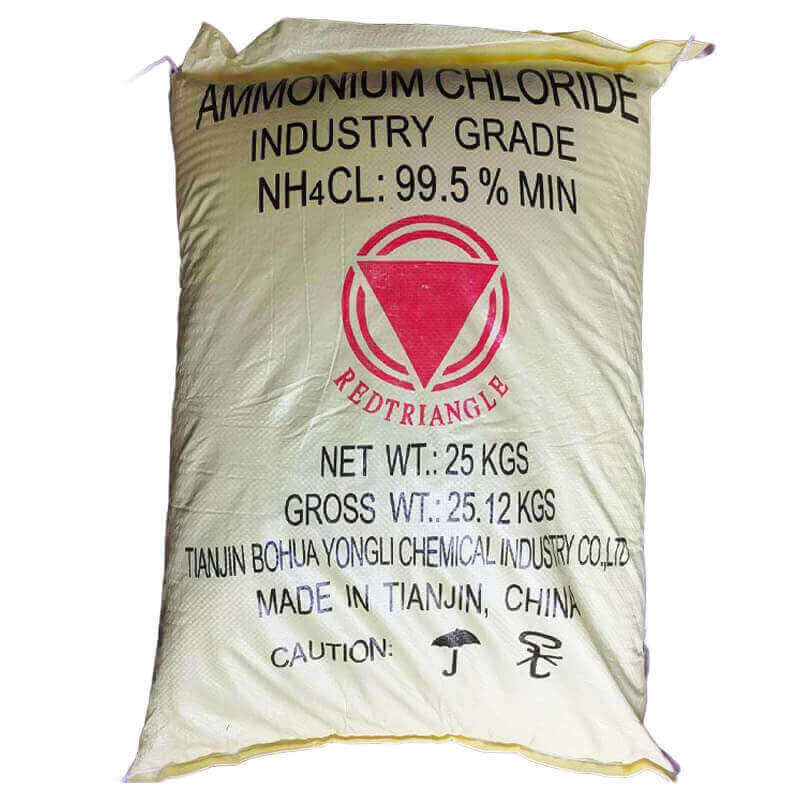
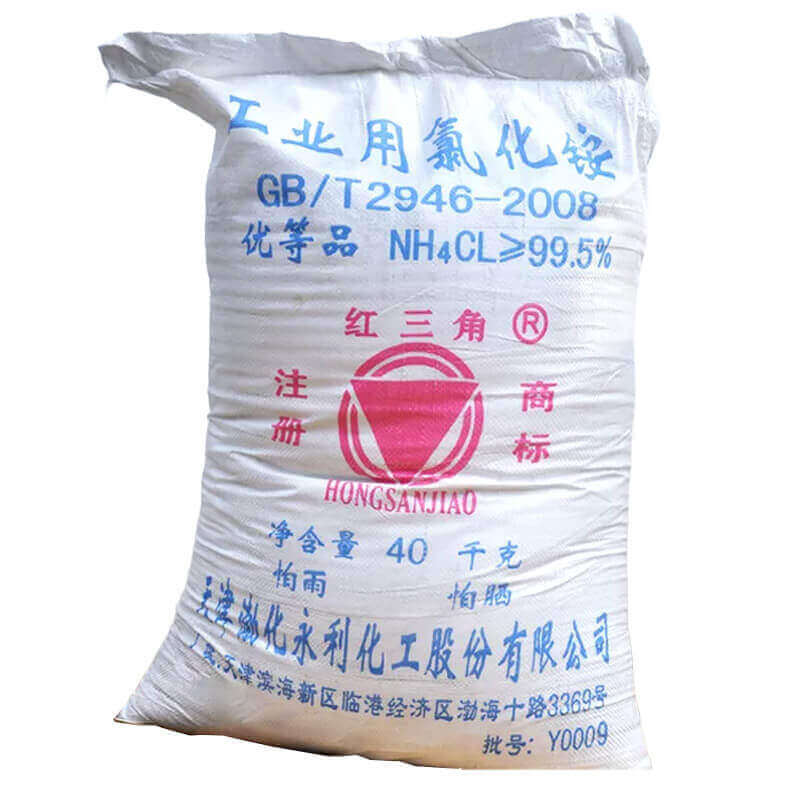
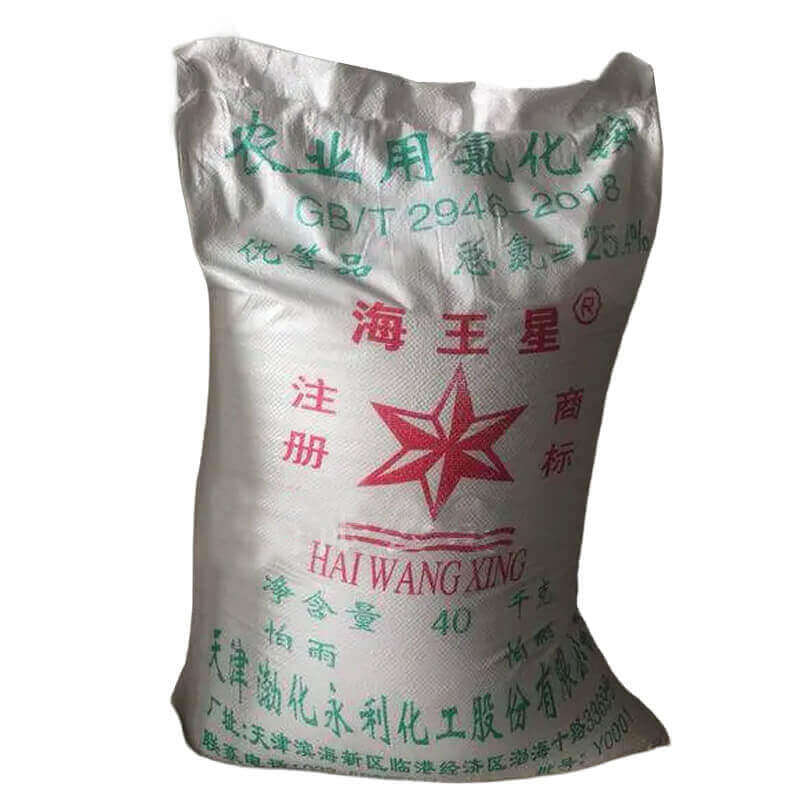
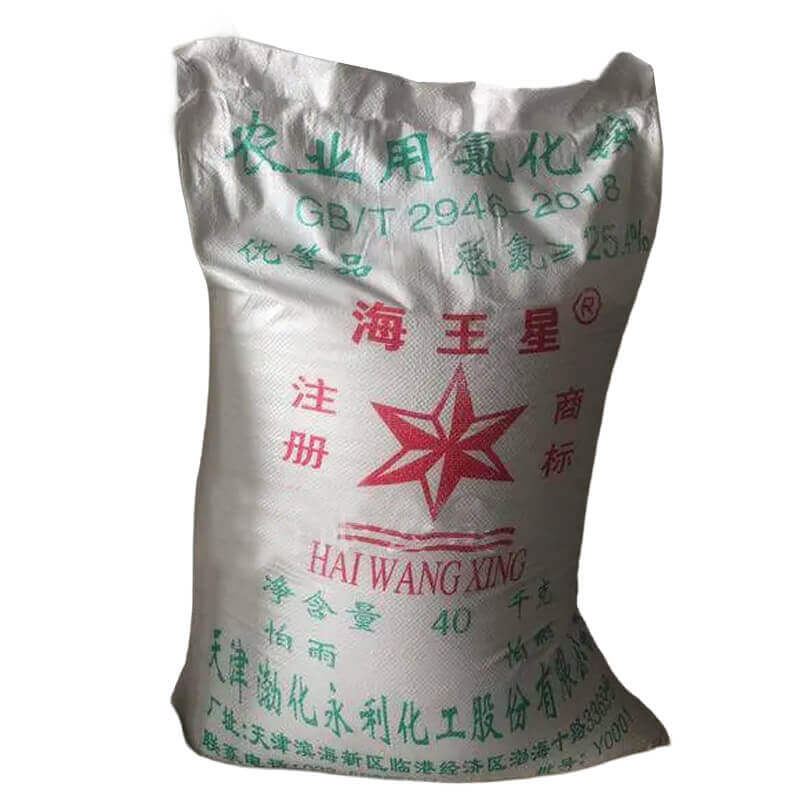
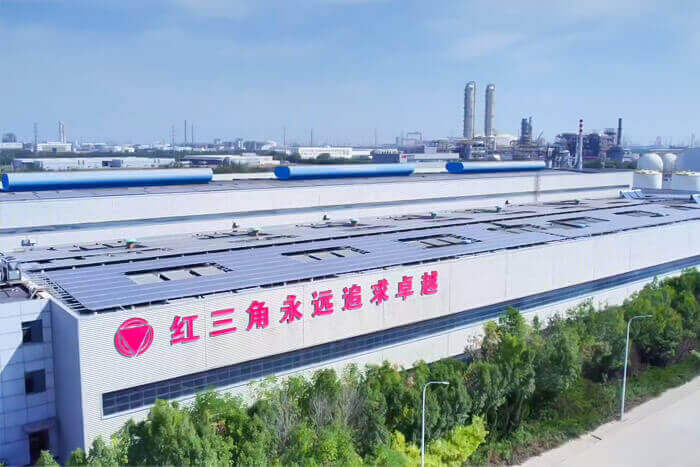
As the birthplace of China’s modern chemical industry and one of Asia’s earliest large-scale soda ash producers, Tianjin Soda Plant (with Tianjin Bohua Yongli Chemical Industry Co., Ltd. as its core operating entity) was founded in 1917. Over more than a century of evolution, it has not only witnessed the full journey of China’s national chemical industry—from scratch, from catching up to global leadership—but also completed a critical transition from a single soda production factory to a modern chemical industry cluster amid the wave of industrial upgrading and green transformation, standing as a typical example of high-quality development for traditional chemical enterprises in China.Industrial Patriotism: The Starting Point of China’s Soda Industry Breaking Western MonopolyThe history of Tianjin Soda Plant is a chronicle of self-reliance and technological advancement in China’s chemical sector. Its predecessor can be traced back to Jiuda Refined Salt Factory, established in Tanggu, Tianjin in 1914 by patriotic industrialist Fan Xudong. In 1917, Yongli Soda Ash Company was formally founded as China’s first private soda ash manufacturer.At that time, China’s soda ash market was completely monopolized by Britain’s Brunner Mond Company. During World War I, disrupted Eurasian shipping sent imported soda prices surging severalfold, triggering widespread shutdowns among domestic downstream enterprises in dyeing, glassmaking, food processing and other sectors. Against this backdrop, Fan Xudong, alongside chemical industry pioneer Chen Tiaofu and other partners, resolved to manufacture soda from local salt. He recruited US-educated chemical engineer Hou Debang to return to China as chief engineer, launching independent research into domestic soda production technology.After six years of iterative experiments, Hou Debang’s team successfully unlocked the core technology of the Solvay (ammonia-soda) process, which had been strictly blockaded by Western powers. In 1926, "Red Triangle" brand soda ash, with a purity exceeding 99%, achieved stable mass production. That same year, it won the gold medal at the 1926 Philadelphia Sesquicentennial Exposition, hailed by the organizing committee as "a symbol of China’s industrial progress", and completely broke the decades-long Western technological and market monopoly over the soda ash industry. In 1930, the product claimed another gold medal at the Belgian Industrial and Commercial Exposition, marking the first time a Chinese chemical product reached world-class standards.Following the full outbreak of the War of Resistance against Japanese Aggression, the factory’s core technical team relocated westward to Wutongqiao, Sichuan, carrying technical drawings and equipment to build a new production base named "New Tanggu". Confronted with the high cost of inland well salt and soaring raw material expenses, Hou Debang’s team spent years conducting over 500 cyclic trials. In 1941, they successfully invented the Hou’s Combined Soda Process (later officially named the combined soda process).This technology deeply integrates synthetic ammonia production with soda ash manufacturing, lifting salt utilization from 70% (under the Solvay process) to over 96%, cutting production costs by 40%, and converting soda-making waste liquor into agricultural ammonium chloride fertilizer. It fundamentally solved the industry-wide problem of waste residue and liquid pollution from traditional ammonia-soda production. In 1953, the technology was awarded No. 1 Invention Certificate of the People’s Republic of China, and it remains one of the world’s mainstream soda ash production processes to this day.As the core entity of the historic "Yongjiu-Huang" alliance (Yongli Soda Plant, Jiuda Refined Salt, Huanghai Chemical Industry Research Society), Tianjin Soda Plant is recognized alongside Nankai University and Ta Kung Pao as one of the "Three Treasures of Tianjin", and stands as a key cultural symbol of the spirit of China’s modern national industry.Industrial Iteration: Building a Modern Chemical System Integrating Three Major SectorsAfter the founding of the People’s Republic of China, Tianjin Soda Plant underwent public-private partnership restructuring and industry consolidation. Today it is a core backbone enterprise under Tianjin Bohai Chemical Industry Group Co., Ltd. It completed corporate system reform in 2013 and was officially renamed Tianjin Bohua Yongli Chemical Industry Co., Ltd.To align with urban functional upgrading and industrial restructuring, Tianjin Soda Plant launched its relocation and modernization project in 2005, constructing a 2-square-kilometer new production base in Lingang Economic Zone, Tianjin Binhai New Area, which went fully operational at the end of 2010. Led by advanced coal gasification facilities, the new site has established a diversified industrial landscape with coordinated development of marine chemicals, coal chemicals and petrochemicals, entirely moving beyond its traditional identity as a single-product soda ash factory:Traditional advantage segment: It operates an 800,000 t/a combined soda production unit. Its "Red Triangle" soda ash and "Neptune" agricultural ammonium chloride have both been named "China Famous Brand Products", maintaining enduring brand competitiveness in domestic markets and overseas markets across Southeast Asia and Africa.Extended industrial chain: It has built production capacity for over ten product lines, including 300,000 t/a synthetic ammonia, 500,000 t/a methanol, 500,000 t/a butyl octanol, 350,000 t/a acetic acid, 40,000 t/a polyoxymethylene (POM) and 150,000 t/a food-grade liquid carbon dioxide, covering basic chemical raw materials, fine chemicals, food additives, polymer materials and other application fields.Industrial ecosystem support: It hosts a complete utility system including air separation, on-site thermal power and wastewater treatment. Leveraging its geographical proximity to Tianjin Port and the Tianjin Pilot Free Trade Zone, it realizes port-chemical integrated logistics coordination, forming full-chain operational capabilities spanning manufacturing, international trade, logistics warehousing and technical services.To date, the company has filed over 300 patents, including 145 invention patents. It is a national high-tech enterprise, and has been inscribed on the "China Time-honored Brands" list and the ranking of China’s Top 500 Petroleum and Chemical Enterprises.Green Transformation: High-Quality Development Anchored on Dual Carbon GoalsIn recent years, amid the global low-carbon transition of the chemical industry, Tianjin Soda Plant has built on its century-long technical heritage to make green and low-carbon development a core strategy, advancing in-depth upgrades in energy conservation, carbon reduction, circular economy and new energy deployment.On the production side, the company continues to reduce unit product energy and material consumption through full-process process optimization and intelligent equipment upgrading. Through industrial flue gas purification and recovery technology, it captures carbon dioxide generated during production and processes it into food-grade liquid carbon dioxide products, realizing resourceful, high-value utilization of carbon emissions and forming a model circular economy system.On energy structure transition, the plant’s distributed photovoltaic power generation project has been connected to the grid and put into operation. Meanwhile, it is deeply integrated into Tianjin’s hydrogen energy industry layout, collaborating with leading energy enterprises to explore process coupling between green hydrogen production and chemical manufacturing, driving the low-carbon and clean upgrading of traditional coal chemical operations.Riding on the industrial cluster advantages of Lingang Economic Zone in Binhai New Area, Tianjin Soda Plant is steadily evolving into a composite enterprise covering "basic chemicals + fine chemicals + new materials + new energy". While consolidating its market position in soda ash and other traditional products, it continues to expand into high-value-added advanced chemical materials, pushing the industry steadily up the value chain.ConclusionFrom a spark of national industry on the salt flats of Tanggu to a modern chemical base in Lingang Industrial Zone, Tianjin Soda Plant’s century-long development has always moved in lockstep with China’s national progress. The "Yongjiu-Huang" ethos—"uphold science, develop industry, prioritize collective interests, serve the society"—has been passed down through generations, and remains the internal driving force behind the enterprise’s continuous innovation.Against the backdrop of dual carbon goals and industrial upgrading, this century-old soda plant is taking technological innovation as its core engine, exploring a viable path for the green transformation of traditional chemical enterprises, and writing a new chapter for China’s national chemical industry in the new era. CONTACT INFORMATIONWebsite:https://www.tianjin-soda-plant.com/Phone:+8615380400285Email:sales2@liwei-chem.com
Read More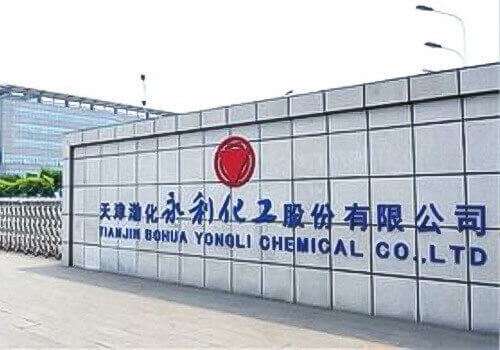
As the core inheritor of China’s modern national chemical industry, Tianjin Bohua Yongli Chemical Industry Co., Ltd. traces its origin to Yongli Soda Ash Company founded in 1917 by patriotic industrialist Fan Xudong and chemical engineering pioneer Hou Debang. Endowed with the technical heritage of Hou’s Combined Soda Process—the No. 1 invention patent of the People’s Republic of China—and the legacy of the "Red Triangle" China Time-honored Brand, it has evolved from a single soda ash producer into a modern chemical leader with coordinated multi-sector operations after a century of industrial iteration, standing as a typical model of high-quality development for traditional chemical enterprises.Located in Lingang Economic Zone of Tianjin Binhai New Area, the company covers an area of 2 square kilometers. Leveraging its geographical proximity to Tianjin Port, it has built a "port-chemical integration" operation system, forming an industrial pattern with in-depth integration of marine chemicals, coal chemicals and petrochemicals. It currently boasts production capacity for over ten product categories, including 800,000 t/a combined soda ash, 500,000 t/a methanol, 350,000 t/a acetic acid, 40,000 t/a polyoxymethylene (POM) and 150,000 t/a food-grade liquid carbon dioxide. Following the launch of its octanol optimization project in 2025, its total butyl octanol capacity has surpassed one million tons per year, ranking among the top in China. With its self-developed rhodium catalyst regeneration technology for oxo synthesis, the company was awarded the title of Tianjin Municipal Manufacturing Single Champion, breaking the long-standing industry barrier of heavy reliance on imported high-end catalysts.As a National High-Tech Enterprise and a 2025 National Green Factory, the company has filed over 300 patents cumulatively, with steadily deepening green and low-carbon deployment. It has completed two phases of hydrogen refueling mother stations with a combined annual capacity of 7,000 tons, serving as a core hydrogen supplier for the Beijing-Tianjin-Hebei Fuel Cell Vehicle Demonstration City Cluster. It realizes resource utilization of carbon dioxide through industrial tail gas purification, and supports distributed photovoltaic and residual pressure power generation projects. Together with its supply chain partners, it completed the steam-to-electricity retrofit of its air separation unit, achieving an annual carbon reduction of over 800,000 tons and forming a closed-loop circular economy production model.Its products are exported to global markets including Southeast Asia, Europe and the United States, and it has been listed among the Top 500 Petroleum and Chemical Enterprises in China for consecutive years. Looking ahead to the 15th Five-Year Plan period, Bohua Yongli is accelerating its expansion into high-end chemical new materials and new energy sectors, fostering new quality productive forces through technological innovation, and continuously elevating the century-old national chemical brand to the high end of the value chain. CONTACT INFORMATIONWebsite:https://www.tianjin-soda-plant.com/Phone:+8615380400285Email:sales2@liwei-chem.com
Read More
As a leading state-owned super-large chemical enterprise directly under Tianjin Municipality, Tianjin Bohai Chemical Industry Group (Bohua Group) carries an industrial heritage of "a thousand years of salt industry and a century of chemical development". Tracing its roots back to the founding of Yongli Soda Plant in 1917—China’s first soda ash manufacturer—it stands as a pivotal cradle of China’s modern chemical industry. After over a century of growth, the group has evolved into a modern chemical conglomerate with total assets of 130 billion yuan and annual operating revenue exceeding 56 billion yuan. It has been listed among China’s Top 500 Enterprises for consecutive years, serving as a core engine for the high-quality development of the petrochemical industry in the Bohai Rim region.Currently, Bohua Group operates three specialized production bases in Lingang, Nangang and Dagang, with four core industrial chains covering chlor-alkali chemicals, modern coal chemicals, petrochemicals and light hydrocarbon chemicals, supported by extended sectors including fine chemicals, rubber products and biomanufacturing. It produces over 1,000 chemical products across general, high-end and fine categories, with a total annual output of nearly 12 million tons. As the core carrier for Tianjin’s "two major chemical enterprises" relocation and upgrading initiative, the Nangang New Materials Industrial Park involves a total investment of 29.4 billion yuan. With its Phase I methanol-to-olefins project and Phase II chlor-alkali integration project put into operation successively, the park now boasts 900,000 t/a of caustic soda capacity and 1.2 million t/a of polyvinyl chloride capacity, completing the full industrial chain from basic raw materials to high-end polymers and forming the core support of the national-level new chemical materials base.Green and low-carbon transformation is the group’s core strategy. Leveraging the resources of Changlu Salt Fields, it has built a 586,000 kW "salt-solar complementary" photovoltaic project, the largest of its kind in the Beijing-Tianjin-Hebei region, with an annual power generation of 770 million kWh. Its industrial by-product hydrogen purification capacity reaches 6,500 tons per year, and it operates Tianjin’s first hydrogen refueling mother station, serving as a core hydrogen supplier for the Beijing-Tianjin-Hebei Fuel Cell Vehicle Demonstration City Cluster, and forming a circular economy model integrating "green power + green hydrogen + chemical production".Looking ahead to the 15th Five-Year Plan period, Bohua Group is accelerating its expansion into high-end new chemical materials and new energy tracks. It will foster new quality productive forces through digital-intelligent transformation and technological innovation, striving to build a world-class modern green chemical industry group.
Read MoreYour reliable partner for high-quality chemical solutions.
Get In Touch